Setup
Each player takes twelve pieces and fills the dark squares of the three rows nearest them, leaving the two middle rows empty. Black — or whichever colour you agree on — moves first.

CLASSIC GAMES
Also known as Draughts, English draughts
Checkers — draughts, if you grew up outside North America — is the classic everyone already knows the rules to, which makes it the easiest multiplayer board game to start a table with. Place the board, drop the pieces on, and go.
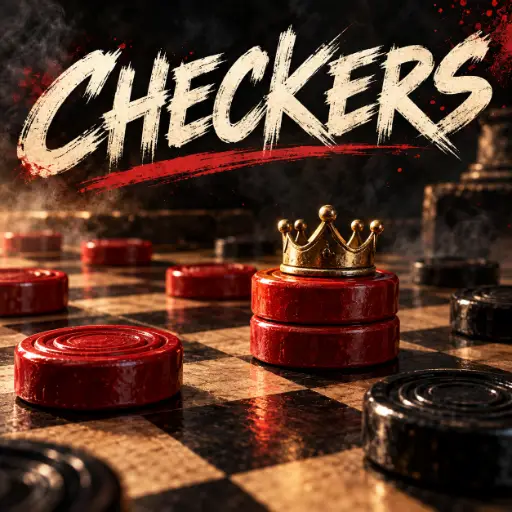
Ready to play
The classic game of checkers
Each player takes twelve pieces and fills the dark squares of the three rows nearest them, leaving the two middle rows empty. Black — or whichever colour you agree on — moves first.
Pieces move one square diagonally forward onto an empty dark square. If an opposing piece sits diagonally ahead with an empty square directly beyond it, you jump over it and remove it from the board. If that landing square lets you jump again, you keep going in the same turn.
Most groups play that a capture is compulsory when one is available. It is worth saying out loud before the first move which way you are playing it, because the game is noticeably different either way.
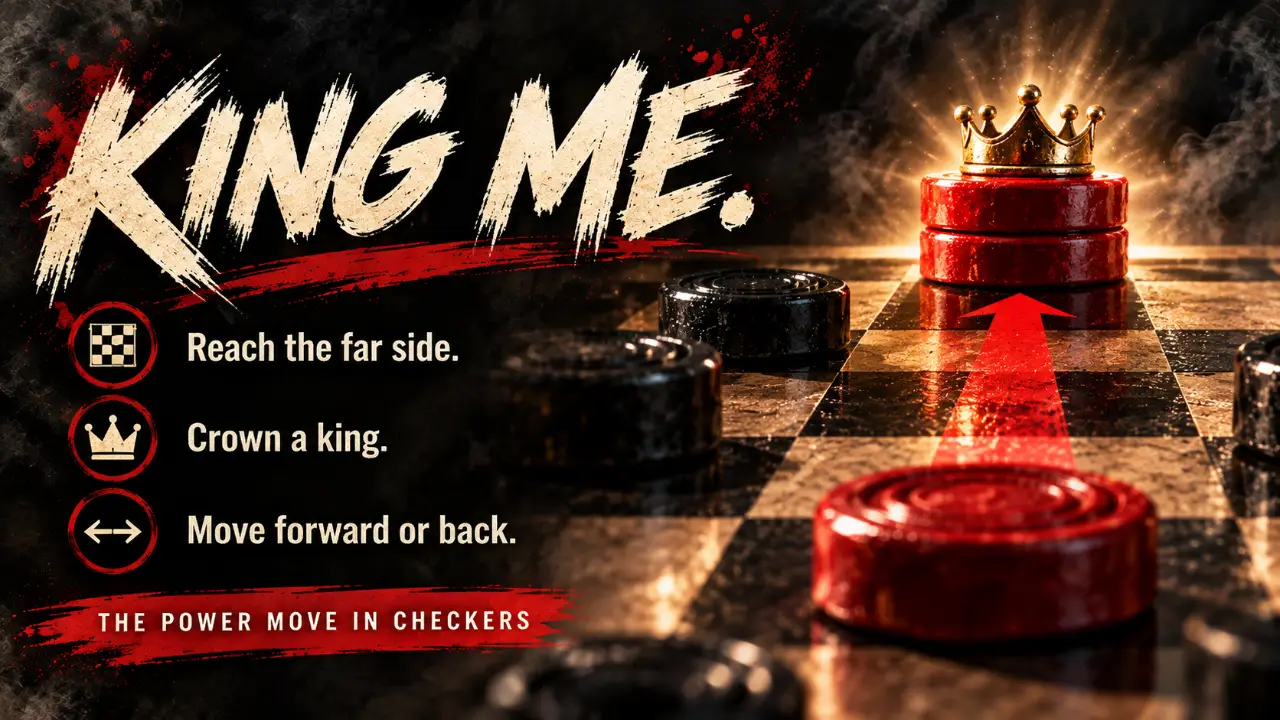
A piece that reaches the far row is crowned — stack a captured piece on top of it, or use one of the modelled crowned pieces. Kings move and jump diagonally both forwards and backwards, which is usually what decides the endgame.
You win when your opponent has no pieces left, or no legal move. A game where neither side can make progress is a draw, and most players agree one rather than shuffle kings forever.
Checkers takes two minutes to learn and considerably longer to stop losing at. None of this is enforced or suggested by the table — it is just what tends to decide games.
Outside North America the game is draughts, and the family is much larger than the version most people learn. Because DiceyTable enforces no rules at all, a variant is not something we have to build — you agree which one you are playing and move the pieces accordingly. Everything below uses the same eight-by-eight board and the same pieces.
The built-in board prints an eight-by-eight grid and the published pack ships the same, so international draughts (10x10) and Canadian draughts (12x12) are the two this page cannot honestly claim: they need a board you bring yourself, which is a mod-editor job rather than something the table does for you. And in every variant here the rules live in your heads — nothing on the table forces a capture or blocks an illegal move.
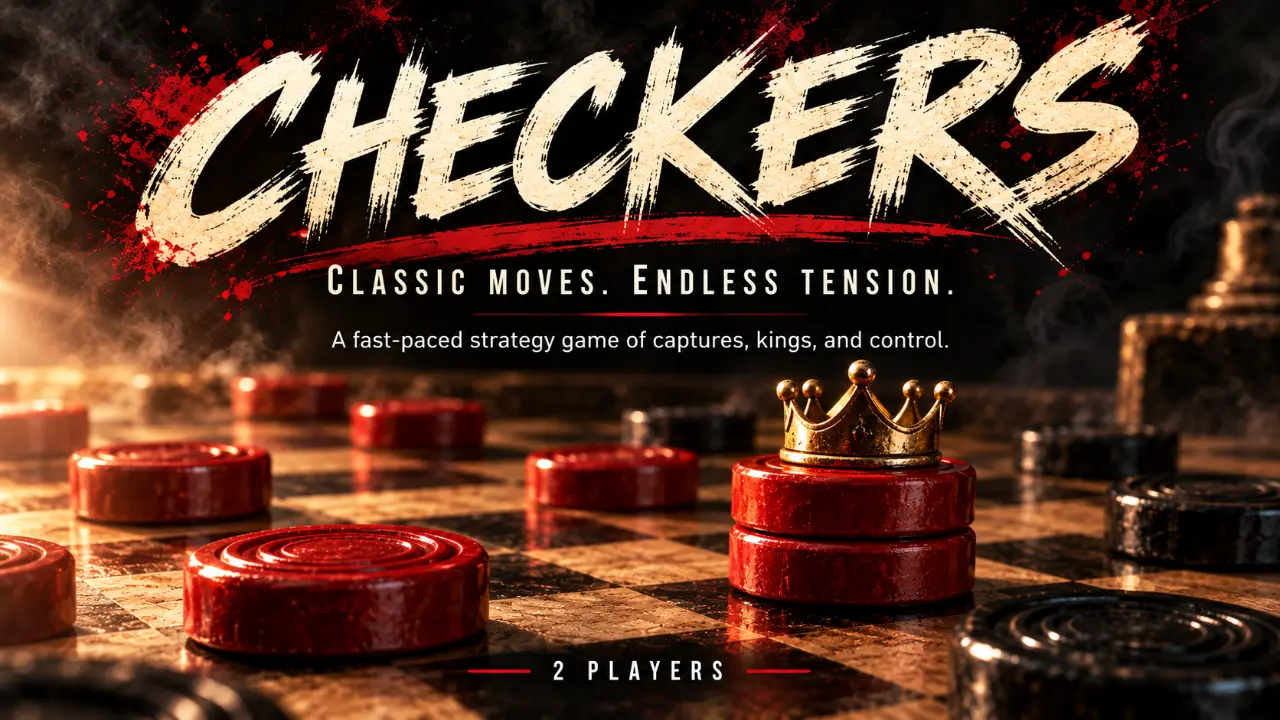
Shots marked “the real table” are captures of DiceyTable running this pack. The rest is the pack’s own promotional artwork — it is lovely, and it is not what the renderer draws.
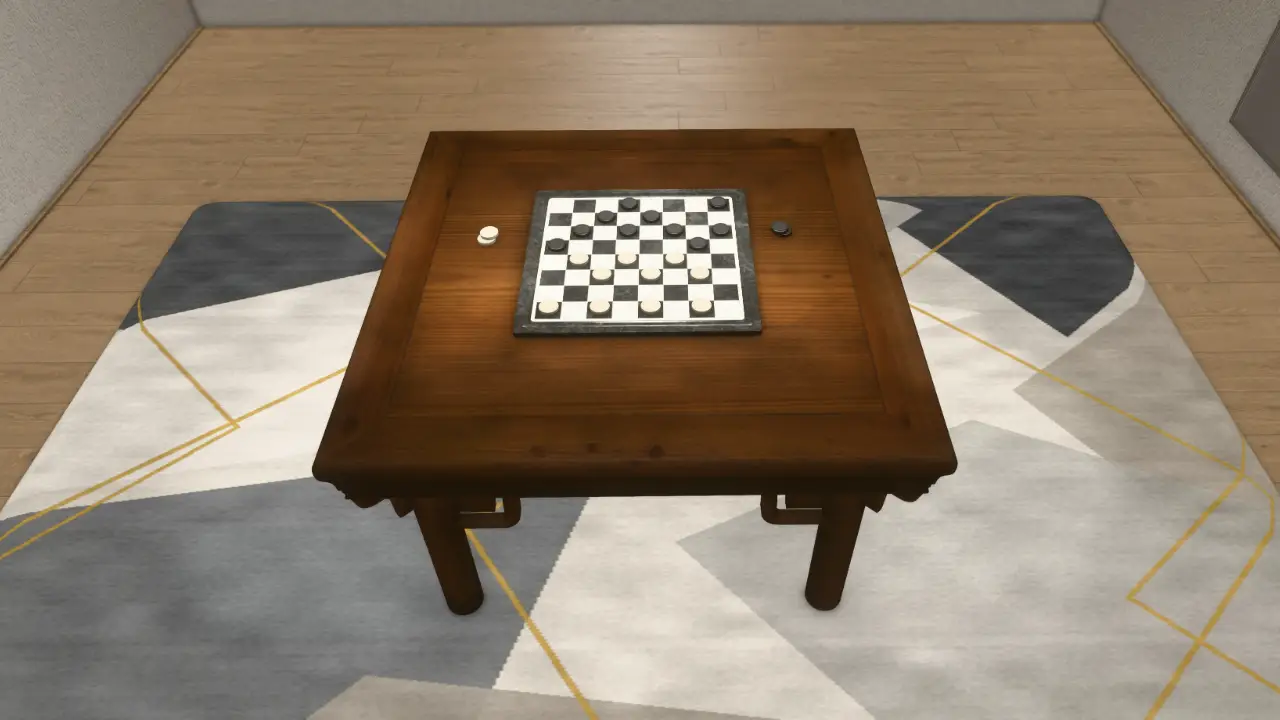
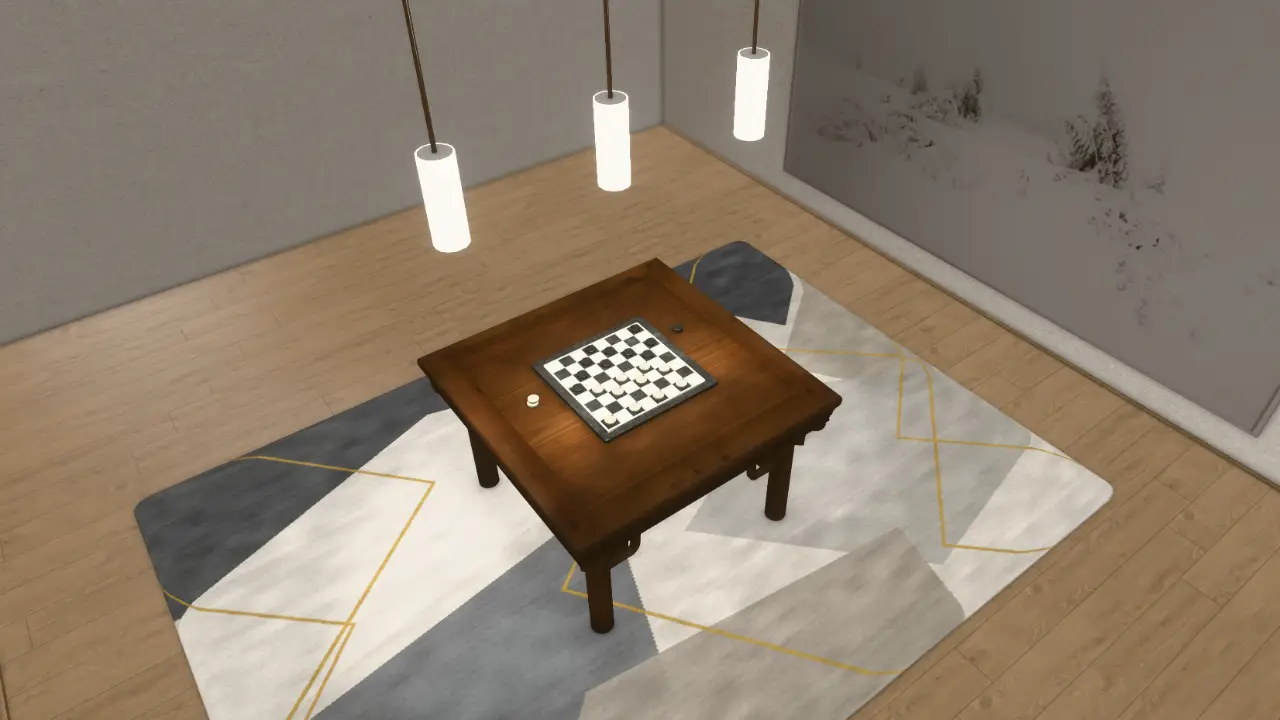

DiceyTable gives you the physical game — the board, the pieces and real 3D physics — not a rules engine. Nobody's move is validated and no illegal move is blocked, so house rules and variants cost you nothing. It runs in the browser with nothing to install, it is free, and you share a link to bring people in.
Building a set by hand is the alternative, not the requirement — the pack above is already laid out. Either way every player needs a free account, and there is nothing to download on any device.
The rules are still yours to enforce, with the pack or without it. The rest of this list is about building a set from the built-in library — the Checkers pack ships its own board.
Open the pack, invite your group with a link, and start playing. Free, in the browser, with nothing to install.